
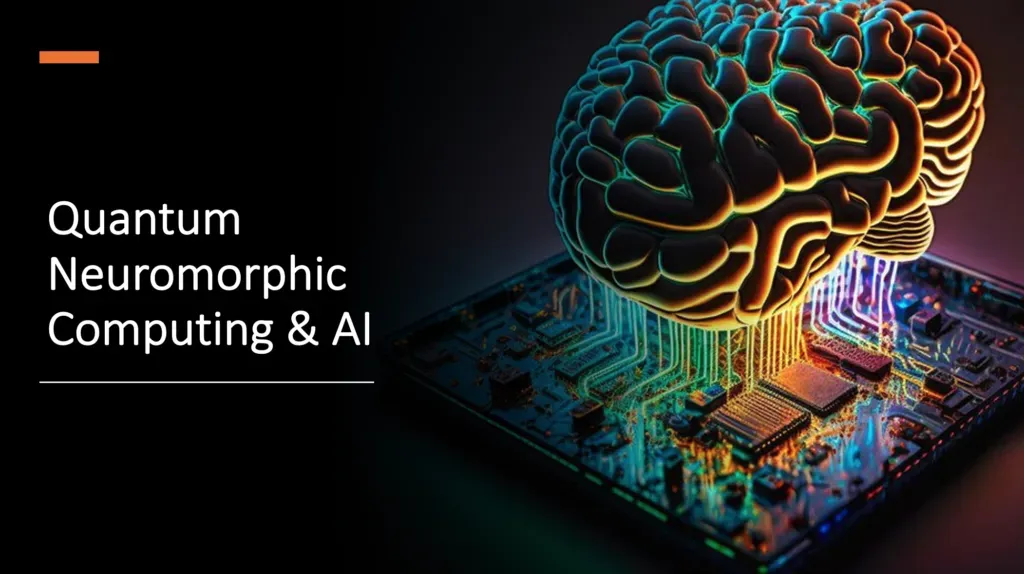
Quantum to neuromorphic tech marks a new convergence that blends concepts from two transformative computing paradigms, inviting researchers and engineers to rethink what machines can learn and how quickly they can adapt. This emerging approach could unlock AI hardware advances by pairing brain-inspired efficiency with hybrid computing concepts that span cloud, edge, and embedded devices. Hybrid systems may use quantum computing capabilities to tackle hard optimization tasks while neuromorphic cores handle real-time learning for robotics, sensing, and adaptive control. The goal is faster inference with lower energy, achieved through cross-domain co-design, thorough prototyping, robust benchmarking, and scalable hardware stacks with industry-grade validation. The upshot is a more versatile platform for intelligent systems that learn, adapt, and operate across edge and cloud environments, reshaping product roadmaps and research agendas across sectors such as manufacturing, healthcare, and transportation.
Beyond the headlines, the conversation uses terms like quantum-inspired computing, brain-like processors, and probabilistic design to describe the shared space. This framing emphasizes cross-domain informatics where brain-inspired architectures leverage probabilistic reasoning and memory-efficient learning, with practical deployment in mind across industry and research. In practice, approaches that emulate synaptic plasticity and event-driven processing aim for fast, low-power inference on sensors, robots, and mobile devices. The push is toward modular hybrids that couple quantum-inspired ideas with spiking neural networks to enable robust edge intelligence and adaptive control.
1) Synergies Between Quantum Computing and Neuromorphic Engineering for AI Hardware
Quantum computing and neuromorphic engineering represent complementary axes of advanced technology that can transform AI hardware. By pairing the speedups of quantum computing for selected tasks with the brain-inspired efficiency of neuromorphic systems, researchers can push beyond the limits of traditional architectures. This fusion leverages quantum computing insights and neuromorphic engineering principles—such as spiking neural networks and event-driven processing—to create smarter, more energy-efficient AI hardware capable of handling complex optimization, simulation, and learning workloads.
In practice, quantum processors can accelerate subroutines in optimization, quantum chemistry, or large-scale simulations, while neuromorphic cores handle real-time perception, continual learning, and edge inference. The resulting hybrid stacks open new possibilities for AI hardware design, enabling near-term gains in performance and energy efficiency and laying the groundwork for scalable, brain-inspired systems that operate at the edge with minimal power.
2) Quantum-Inspired Computing in Neuromorphic Design
Quantum-inspired computing brings concepts from quantum theory into neuromorphic engineering without requiring full-scale quantum hardware. Probabilistic computing, stochastic resonance, and tight memory-computation coupling inform how neuromorphic chips implement learning rules, network topologies, and robustness to variability. By embedding quantum-inspired strategies into spiking neural networks and neuromorphic substrates, designers can improve learning efficiency, fault tolerance, and adaptability in AI hardware.
This cross-pollination enhances neuromorphic design with new software models and hardware primitives that emphasize resilience to noise and hardware variability. The resulting AI hardware benefits from more flexible inference pipelines and better edge performance, while maintaining the energy efficiency and online learning capabilities that neuromorphic engineering strives for.
3) End-to-End Hybrid Architectures: Quantum Accelerators Meet Spiking Neural Networks
A compelling vision of the future is an end-to-end hybrid architecture in which quantum accelerators tackle hard optimization, simulation, or model-training subproblems, and spiking neural networks run on neuromorphic cores for perception, control, and real-time adaptation. In such systems, quantum computing provides the heavy lifting for computation-heavy modules, while neuromorphic processing delivers low-latency, low-power inference and learning at the edge.
Realizing this vision requires careful co-design of hardware and software interfaces, along with programming models that map problems across quantum and neuromorphic substrates. Efficient data exchange, cross-domain compilers, and standardized APIs will be essential to unlock seamless hybrid workflows that leverage AI hardware capabilities across the full stack.
4) Bridging Hardware and Software: Interfaces, Toolchains, and Standards
Bridging quantum and neuromorphic systems hinges on robust interfaces that can operate across cryogenic quantum environments and room-temperature neuromorphic boards. Questions of latency, data fidelity, and timing become central as quantum-accelerated subroutines hand off results to brain-inspired inference engines. Architectural models, co-design principles, and co-optimization strategies are required to ensure smooth handoffs and maintain overall system performance.
To accelerate progress, software toolchains, compilers, and benchmarking standards must evolve to support cross-domain workloads. An open, interoperable stack with cross-disciplinary libraries will enable researchers and developers to compare approaches fairly, reuse components, and scale experiments from lab demos to deployed AI hardware systems.
5) Applications Across Sectors: Edge AI, Science, and Healthcare
The convergence of quantum and neuromorphic technologies could unlock practical benefits across multiple sectors. In edge AI and autonomous systems, neuromorphic processors can handle perception and control locally while quantum resources assist with planning, optimization, or large-scale model training, enabling smarter, faster, and more energy-efficient devices. This AI hardware combination is well-suited for real-time sensing, robotics, and responsive decision-making at the edge.
Beyond the edge, applications in materials science, quantum chemistry simulations, and healthcare may benefit from hybrid architectures that pair quantum computing with neuromorphic inference. By translating quantum-calculated insights into rapid, adaptive diagnostic tools or mobile, energy-efficient analytics running on neuromorphic chips, researchers can accelerate discovery and improve outcomes.
6) Quantum to neuromorphic tech: Roadmap for the Next Decade
Looking ahead, the path to widespread Quantum to neuromorphic tech involves staged milestones: hybrid demonstrations, deeper hardware co-design, and software toolchains that simplify cross-domain programming. Near-term efforts will focus on standardized data exchange interfaces between quantum and neuromorphic components, and on developing energy-efficient neuromorphic accelerators that work alongside quantum subsystems—advancing AI hardware toward more capable, hybrid systems.
In the longer term, a mature ecosystem could emerge where quantum resources accelerate optimization and simulation steps feeding brain-inspired inference, while neuromorphic cores execute large-scale learning at low power. Realizing this vision requires ongoing advances in error mitigation, reliable interfacing, and interoperable software stacks, enabling AI hardware and related technologies to scale from research labs to real-world deployment.
Frequently Asked Questions
What is Quantum to neuromorphic tech, and why is it significant for AI hardware?
Quantum to neuromorphic tech is the convergence of quantum computing and neuromorphic engineering as complementary layers in the computing stack. In AI hardware, quantum computing provides accelerators for hard optimization and simulation, while neuromorphic engineering offers energy-efficient, brain-inspired processing through spiking neural networks for real-time perception and learning. This hybrid approach aims to deliver scalable intelligence with both speed and efficiency.
How do quantum computing and neuromorphic engineering complement each other in hybrid architectures?
In hybrid architectures, quantum computing tackles intractable subproblems—such as optimization and quantum chemistry—while neuromorphic engineering handles perception, control, and continual learning with spike-based processing. Together, they enable end-to-end AI hardware workflows where quantum and neuromorphic substrates share data and tasks, sometimes guided by quantum-inspired computing ideas.
What is the role of spiking neural networks in Quantum to neuromorphic tech?
Spiking neural networks are the core of neuromorphic engineering, delivering low-power, event-driven computation for real-time inference and learning. In Quantum to neuromorphic tech, they provide the brain-like layer that processes streaming data, while quantum components accelerate higher-level reasoning and optimization behind the scenes.
What challenges must be overcome to realize practical Quantum to neuromorphic tech?
Key challenges include interfacing quantum processors with neuromorphic chips across different temperatures and latencies, achieving seamless handoffs between quantum-accelerated subroutines and brain-inspired inference, plus developing software toolchains, compilers, and benchmarks. Robust error mitigation and scalable co-design are also essential.
Are there near-term applications for quantum-inspired computing within neuromorphic AI hardware?
Yes. Quantum-inspired computing approaches—borrowing ideas from quantum theory—can improve probabilistic processing and memory-computation coupling in neuromorphic hardware. Early demonstrations target optimization, sensing, and edge AI, where hybrid AI hardware can combine neuromorphic inference with quantum-inspired routines without requiring full quantum hardware.
How might AI hardware evolve if Quantum to neuromorphic tech becomes mainstream?
AI hardware could evolve into end-to-end hybrids where quantum resources accelerate optimization and simulation, while neuromorphic cores perform real-time learning and perception on the edge. This would enhance energy efficiency, enable scalable AI at the device level, and require standardized interfaces and ecosystem tooling for cross-domain workloads.
| Aspect | Quantum computing | Neuromorphic computing | Hybrid / Intersection |
|---|---|---|---|
| Main idea | Leverages qubits, superposition and entanglement to tackle specific problems; potential speedups in optimization, factoring, and quantum simulations. | Brain-inspired, energy-efficient processing using spiking neural networks for pattern recognition, sensor fusion, and real-time adaptation. | Not rivals; complementary layers; intersection aims to unlock capabilities neither can achieve alone. |
| Goal / Focus | Move from concept to practice; develop workflows, programming models, and error mitigation for practical use. | Pursue real-world deployment with continual learning and edge-friendly, robust neuromorphic processing. | Bridge domains to redefine AI hardware, accelerators, and intelligent edge devices; use quantum accelerators for pre-processing and neuromorphic cores for learning and control. |
| Why it matters / Opportunities | Speedups for optimization, chemistry simulations, and certain ML subroutines; new programming models and hybrid workflows. | Energy-efficient, real-time perception; continual learning; robust sensor interpretation at the edge. | End-to-end intelligent systems; deployment of hybrid architectures that combine strengths of both domains; quantum-inspired ideas for neuromorphic hardware. |
| Key challenges (from introduction) | Coherence and gate errors; decoherence, noise, error mitigation; integration with classical systems; hardware scalability. | Device variability and non-ideal analog components; learning stability; evolving software/hardware ecosystems. | Interfaces between quantum and neuromorphic layers; hardware co-design, software toolchains, cross-domain standards and benchmarking. |
Summary
Quantum to neuromorphic tech marks a threshold in computing, weaving together the rapid potential of quantum processors with the energy-conscious learning of neuromorphic systems to create smarter, more adaptable machines. By viewing these domains as complementary rather than rival approaches, researchers can envision hybrid architectures that tackle hard optimization, real-time perception, and edge intelligence with greater efficiency. The path to practical systems will require advances in hardware integration, software toolchains, and cross-domain benchmarks. In education, industry, and research, embracing this hybrid future can redefine AI hardware, accelerators, and edge computing, unlocking capabilities neither paradigm could deliver alone. As research continues, the fusion of quantum computing and neuromorphic engineering holds promise for faster, smarter, and more resilient technologies.

